
Russian
Russian Intermediate Mini-Lesson: Social Dynamics & Friendships
Learn essential Russian expressions for making friends, keeping in touch, and talking about relationships in this intermediate Russian mini lesson.

Learn essential Russian expressions for making friends, keeping in touch, and talking about relationships in this intermediate Russian mini lesson.

Learn when to use ты and вы, two essential Russian words that help you sound natural and polite in everyday conversations.

Learn how Media Russian uses the common expression из-за (“because of”) to explain the causes behind events in news reporting.

Learn one of the first essential rules of Russian grammar: past tense verbs change to match the speaker’s gender.

In this lesson, you’ll learn how to use the instrumental case to talk about professions and how to use свой to refer to your own possessions naturally.

In this lesson, you’ll learn how to express your needs and make a polite request in a Russian café while noticing a key grammar rule.

I’d like to share with you some of my favorite channels on Youtube that have helped me get through the elementary level or that I wish I had known about when I was an elementary learner.
Here are my recommendations for channels from amazing content creators on YouTube that are ideal for intermediate-level (B1-B2) students.
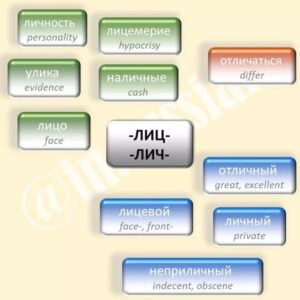
Today I would like to show you how productive the root лич/лиц (face) is and share some frequently used collocations and idioms in which the derivatives of this root are used. Поехали!

This short video is about forming the comparative degree of Russian adverbs or adjectives when we need to show to what extent something is bigger, cheaper and so on.
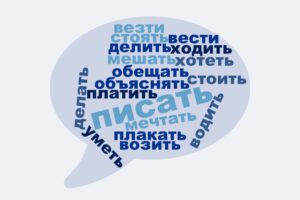
Review the conjugations of these common verbs to avoid mixing them up.
Get to know the Beginning Learner’s Russian Dictionary. Take a look at the organization of the entries and the wealth of lexical and grammatical information the dictionary contains.
To pronounce Russian correctly, you first need to know the sounds represented by the letters of the Russian alphabet, both consonants and vowels.

Today I would like to tell about a very common mistake among learners of the Russian language. It is the way to say: One cannot / It is not allowed/ It is forbidden.