

This lesson is based on a single sentence taken from The News in Modern Standard Arabic, a resource designed to bridge the gap for lower-level learners who want to read and discuss real-world topics. It uses simplified news articles to build confidence in “Media Arabic”—the specific style used in newspapers and broadcasts
Please note that this lesson is more advanced than our last Elementary Mini-Lesson. It is important to remember that even at a lower level, you can read and enjoy challenging material with the right mindset. You do not need to analyze and understand every detail, such as the specific grammatical case marker suffixes known as i’raab. Instead, focus on breaking sentences into manageable chunks, as we have done in the breakdown below, to build your comprehension.
In this unit, we follow a report from Ontario, Canada, regarding a curriculum update. The Minister of Education, Stephen Lecce, explains that the math curriculum hadn’t changed since 2005, leading to a gap in student skills. This lesson focuses on a specific phrase used to connect that past starting point to the current situation.
The Sentence
وَصَرَّحَ وَزيرُ التَّعْليمِ، سْتيفِنْ ليتْشي، أنَّهُ مُنْذُ ذَلِكَ الوَقْتِ، لا يَتَعَلَّمُ الكَثيرُ مِنَ التّلاميذِ المَهاراتِ الَّتي يَحْتاجونَها.
(wa-ṣarraḥa wazīru -t-ta‘līmi, Stīfin Lītshī, annahu mundhu dhalika -l-waqti, lā yata‘allamu -l-kathīru mina -t-talāmīdhi -l-mahārāti -llatī yaḥtājūnahā)
The Minister of Education, Stephen Lecce, stated that since that time (since then), many students have not been learning the skills they need.
The Breakdown
- وَصَرَّحَ (wa-ṣarraḥa): “and [he] stated/declared” This is a high-frequency verb in media contexts used to attribute statements to officials.
- مُنْذُ ذَلِكَ الوَقْتِ (mundhu dhalika -l-waqti): “since that time” or “since then” This is our core phrase, establishing a timeline that begins at a specific point in the past.
- لا يَتَعَلَّمُ (lā yata‘allamu): “they do not learn” This shows a continuing state in the present.
- الكَثيرُ مِنَ التّلاميذِ (al-kathīru mina -t-talāmīdhi): “many of the students/pupils” A common way to express “many” using a “quantity of” structure.
- المَهاراتِ الَّتي يَحْتاجونَها (al-mahārāti -llatī yaḥtājūnahā): “The skills that they need”.
Final Tip
The word مُنْذُ (mundhu) is essential for providing historical context in news reporting. It functions as a bridge, showing when an ongoing situation first began. While it often pairs with ذَلِكَ الوَقْتِ (dhalika -l-waqt) to mean “since then,” it can also be followed by specific dates or events.
Here are two other examples from the book:
- With a specific year: “…for the first time since 1965” (مُنْذُ عامِ ١٩٦٥).
- With a specific event: “…it has been less since the government… fell” (مُنْذُ سُقوطِ حُكومَةِ…).
Source: The News in Modern Standard Arabic
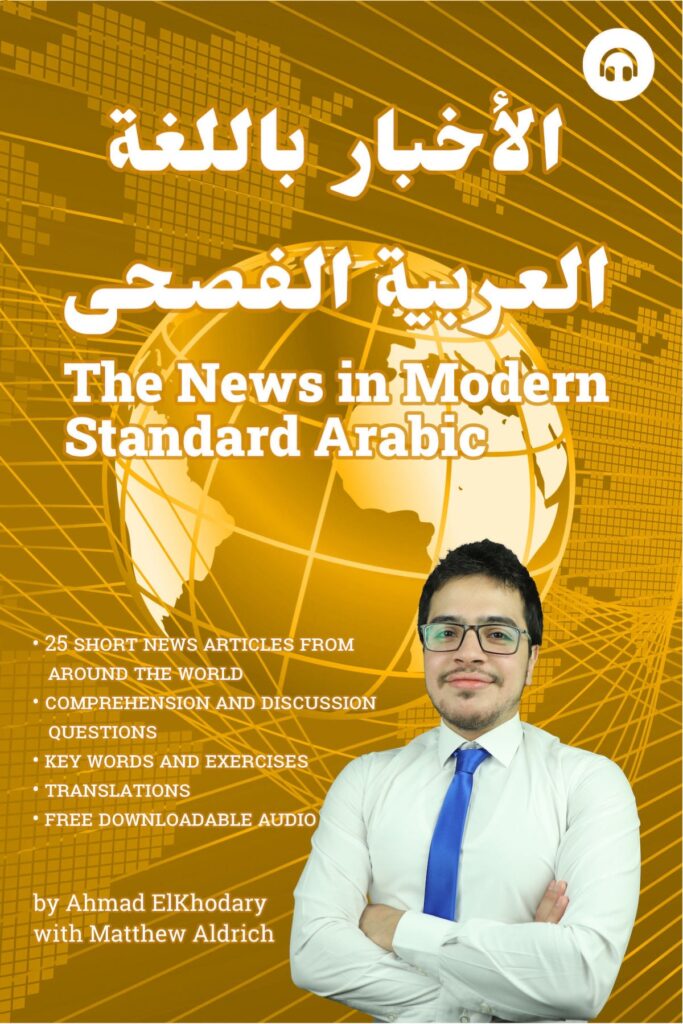
The News in Modern Standard Arabic
A news-based Modern Standard Arabic eBook with 25 units designed to help lower-level learners transition toward reading real Arabic news.