
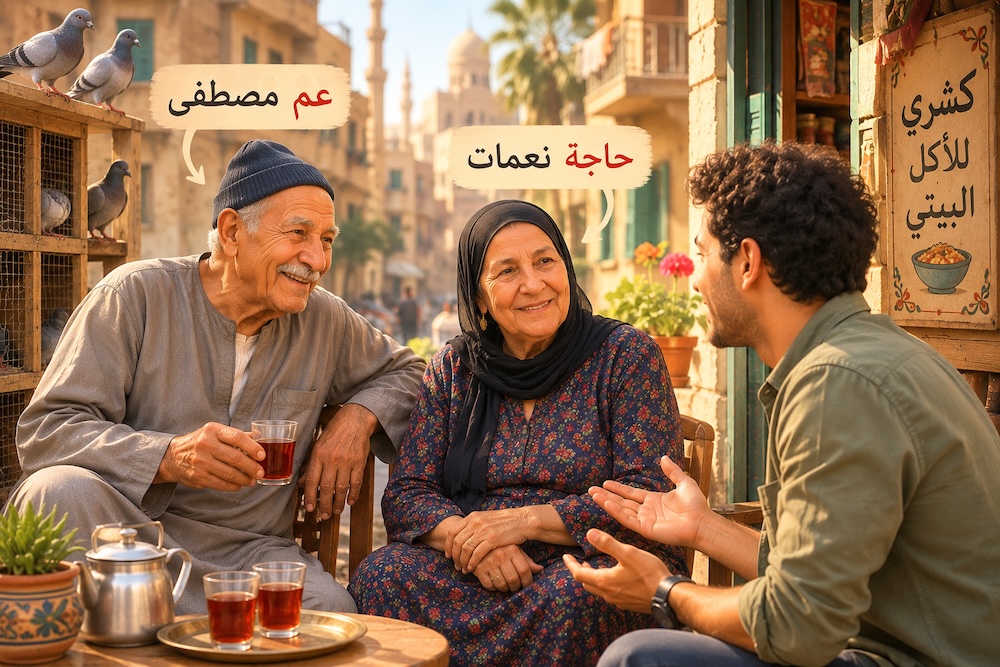
This online lesson is based on a single sentence taken from the Level Up! Egyptian Arabic Stories (Book 1) series, which is designed for adult learners and focuses on culturally authentic narratives. In Egyptian society, addressing elders and community members with specific titles is a vital social norm that conveys respect and warmth.
We will look at two key titles used throughout the stories: عمّ (Amm) and حاجّة (Hagga). In the story The Pigeon Tower, we are introduced to Amm Moustafa, a traditional pigeon keeper. In The Secret of the Koshari, we meet Hagga Neamat, the matriarch of a family of koshari vendors.
The Sentences
عمّ مُصْطفى عنْدُه بُرْج حمام.
3ammə muʂʈáfa 3ándu búrgə ɧamām.
Uncle Moustafa has a pigeon tower.
في يوْم، الحاجّة نِعْمات، أُمُّهُم، زارِت المحلّيْن.
fi yōm, ilɧágga ni3māt, ummúhum, zārit ilmaɧallēn)
One day, Hagga Neamat, their mother, visited both shops.
The Breakdown
- عمّ (Amm): Literally translates to “paternal uncle,” but in Egyptian culture, it is a respectful way to address any older man. It is used broadly in social contexts, such as for a neighbor, a shopkeeper, or a family friend like Amm Moustafa.
- حاجّة (Hagga): This is a respectful title for an older woman. While it originally referred to someone who had completed the pilgrimage to Mecca (Hajj), it is now used more generally for respected elderly women in the community, like Hagga Neamat. The male version is حاجّ (Hagg).
- عنْدُه (ʕandu): “He has.” This combines the preposition 3and (at/with) and the suffix -u (him).
- زارِت (zārit): “She visited.” The feminine past tense form of the verb “to visit”.
Final Tip: Using “Ya” for Direct Address
When you are speaking directly to someone using these titles, you must almost always use the vocative particle يا (ya) before the title. This makes the address personal and polite.
For example, in the stories, characters use this particle frequently:
- “يا جِدّو” (ya gíddu): “Grandpa”.
- “يا طارِق” (ya ʈāriʔ): “Tarek”.
- “يا حسن” (ya ɧasan): “Hassan”.
Using “يا عمّ مُصْطفى” (Ya Amm Moustafa) or “يا حاجة نِعْمات” (Ya Hagga Neamat) when speaking to them shows that you recognize their seniority and status within the community.
Source: Level Up! Egyptian Arabic Stories (Book 1)
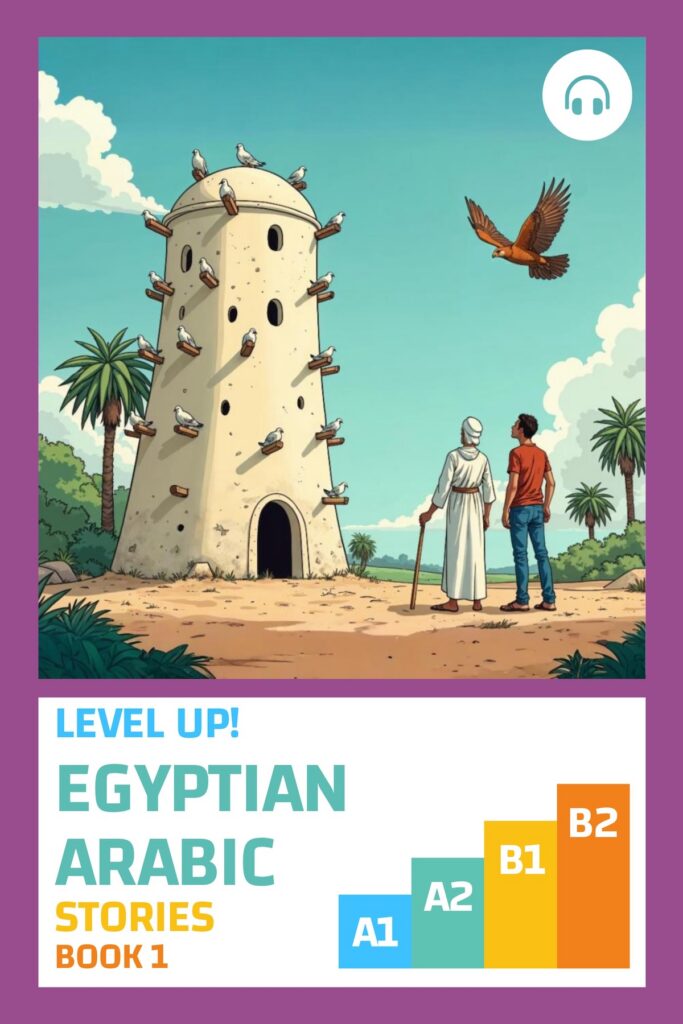
Level Up! Egyptian Arabic Stories (Book 1)
A graded Egyptian Arabic eBook with six original stories, each presented at four CEFR levels from A1 to B2, with audio and translations.