
This lesson is based on Modern Standard Arabic Vocabulary, a comprehensive reference designed to build a large store of words quickly. As the book’s introduction notes, vocabulary—even more than grammar—is the key to effective communication; while you can survive a shop visit with just the word for “sugar,” perfect grammar without the right noun will leave you empty-handed.
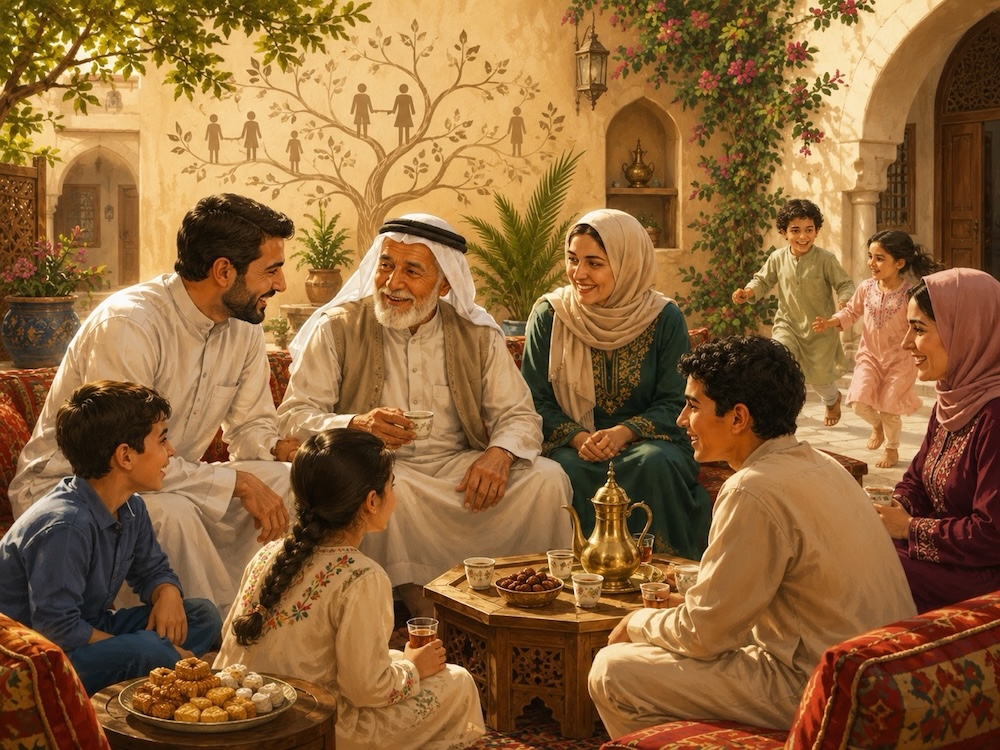
This lesson explores the theme of Family (Section 2). We will look at how Arabic distinguishes between different types of relatives and the unique way it describes extended family members.
The Vocabulary: Family (الأُسْرَة والعائِلَة)
| English | Arabic Script | Phonemic Transcription |
|---|---|---|
| Immediate family | أُسْرَةٌ (أُسَرٌ) | ʔusratun (ʔusarun) |
| Extended family | عائِلَةٌ | 3āʔilatun |
| Relative | قَريبٌ (أَقارِبُ) | qarībun (ʔaqāribu) |
| Grandfather | جَدٌُ (أَجْدادٌ) | jaddun (ʔajdādun) |
| Uncle (paternal) | عَمٌّ (أَعْمامٌ) | 3ammun (ʔa3māmun) |
| Uncle (maternal) | خالٌ (أَخْوالٌ) | xālun (ʔaxwālun) |
| Cousin (m. paternal) | اِبْنُ عَمٍّ | ibnu 3ammin |
| Cousin (f. maternal) | بِنْتُ خالٍ | bintu xālin |
Helpful Notes on Arabic Family Terms
1. The “Immediate” vs. “Extended” Split In Arabic, there is a clear distinction between your nuclear family (the people you live with, like parents and siblings) and your broader family tree. Use أُسْرَة (ʔusratun) for your immediate household and عائِلَة (3āʔilatun) for your extended relatives.
2. Paternal vs. Maternal Relatives Unlike English, which uses “uncle” and “aunt” for both sides of the family, Arabic specifies which parent you are related through.
- عَمّ (3amm) is specifically your father’s brother.
- خال (xāl) is specifically your mother’s brother. Adding a ـة (-atun) to these creates the feminine versions: عَمَّة (father’s sister) and خالَة (mother’s sister).
3. Describing Cousins There is no single word for “cousin” in Arabic. Instead, you describe the specific relationship: “son of my paternal uncle” or “daughter of my maternal aunt”. For example, to say “my (male) cousin” on your father’s side, you say اِبْنُ عَمّي (ibnu 3ammī).
4. Forming Feminine Nouns The book follows a simple rule: for nouns denoting humans, only the masculine version is usually listed if the feminine can be formed by adding ـة (-atun). For example, if a grandson is حَفيدٌ (ɧafīdun), a granddaughter is حَفيدَةٌ (ɧafīdatun).
5. Cultural Note: The Teknonym In Arab culture, a common way to show respect and familiarity is through a kunyatun (teknonym). This consists of the word أَبو (abū – father of) or أُمّ (ummu – mother of) followed by the name of their eldest son (or daughter if there is no son). For example, a man named Khaled with a son named Ali might be respectfully called أَبو عَلِيٍّ (Abū 3aliyyin).
Final Tip: Irregular Plurals When studying these lists, pay close attention to the words in parentheses, such as (أَقارِبُ). These are irregular (broken) plurals. Since they do not follow a standard pattern, they should be memorized alongside the singular form of the noun.
Source: Modern Standard Arabic Vocabulary
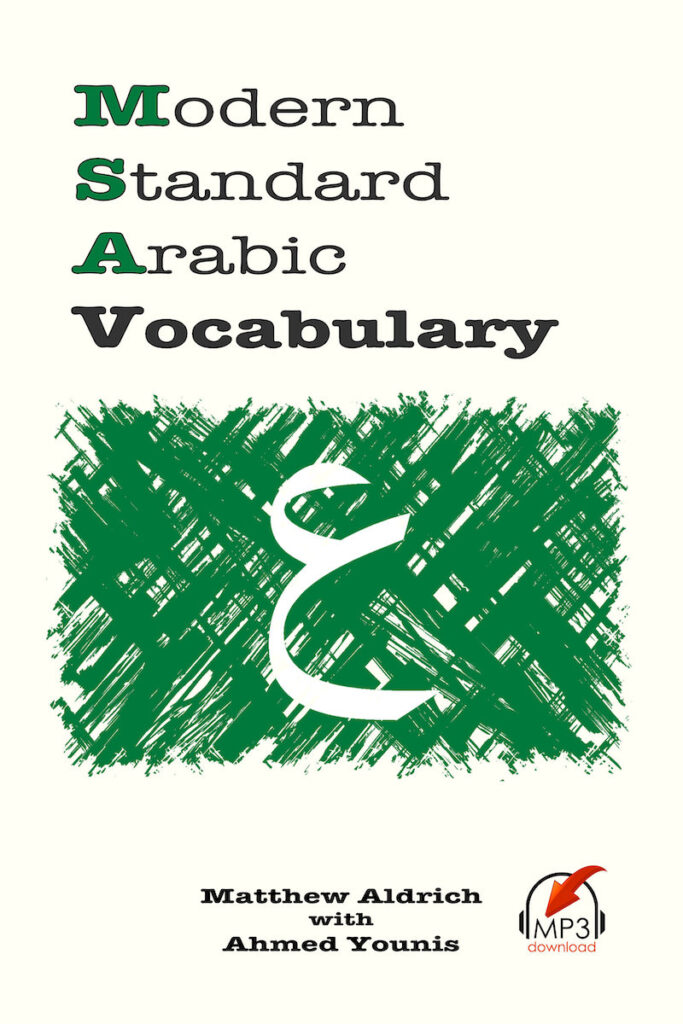
Modern Standard Arabic Vocabulary
A Modern Standard Arabic vocabulary eBook featuring over 5,200 commonly used words, expressions, and example sentences with transcription, Arabic script, and audio organized into 56 thematic sections.