
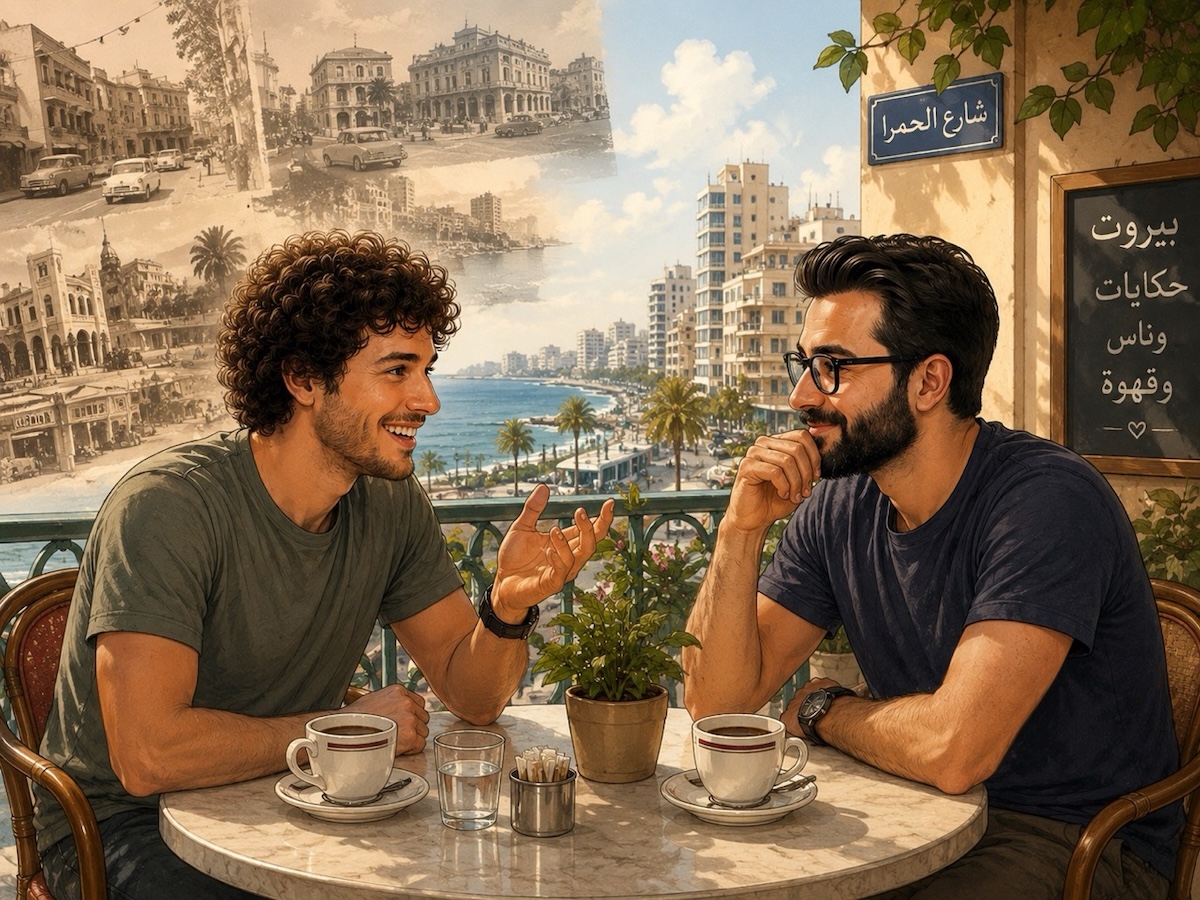
This online lesson is based on a single sentence taken from Lebanese Arabic Dardashi, a resource designed for conversational fluency that uses 25 mock-podcast episodes to teach natural, everyday Lebanese Arabic. The book features back-and-forth chitchat between friends, helping learners master the “fillers” and idiomatic bridges used in authentic Beiruti speech.
In Episode 14, Charbel and Omar discuss the “Golden Age of Lebanon” (1950–1975), a period when the country was known as the “Switzerland of the East”. Omar explains that while he feels pride for this history, the current economic situation makes the topic emotionally complex for him. This lesson focuses on the construction used to describe experiencing two conflicting emotions at the same time.
The Sentence
“هَيْدا المَوْضوع اللي رح نِحْكي عنّو اليوْم بْيِخْلق فِيّي شُعور مُزْدَوج.”
(hayda -l-mawdūʕ illi raḥ niḥki ʕanno -l-yawm byikhluʔ fiyyi shuʕūr muzdawaj)
“This topic that we are going to talk about today creates a double (mixed) feeling in me.”
The Breakdown
- بْيِخْلق فِيّي: “Creates in me.” The verb khalaʔ (to create) is used here to describe the internal generation of an emotion.
- شُعور: “Feeling.” A common word for emotion or sensation.
- مُزْدَوج: “Double” or “mixed.” While this can mean “dual” (like a double room), in this context, it describes having two conflicting emotions at once.
- اللي رح نِحْكي عنّو: “Which we will talk about.” This relative clause uses illi (which/that) and the future particle raḥ with the conjugated verb niḥki (we talk).
Final Tip: Mastering “Mixed Feelings”
The phrase شُعور مُزْدَوج is your go-to expression for the bittersweet middle ground. In Lebanese conversation, it is almost always followed by a contrast between حنين (nostalgia) or فخِر (pride) and غصّة (a lump in the throat or heartache).
Here are two other examples of this logic from the book:
- Contrasting Pride and Sadness: “I have nostalgia and pride… but at the same time it creates a lump in my throat (heartache) in my heart.” (عِنْدي حنين وفخِر… بسّ بِذات الوَقِت بْيِخْلق غصّة بِقلْبي).
- Joy Mixed with Pain: Regarding family gatherings, Charbel mentions: “Moments that have joy and a lump in the throat at the same time.” (لحْظات هيْك فِيا فرْحة وغصّة مِتِل ما قِلِت بِذات الوَقِت).
Bonus Vocabulary from Lebanese Arabic Dardashi
To help you describe your emotions about various topics with more nuance, here is additional vocabulary from Lebanese Arabic Dardashi, categorized by the “vibe” of the emotion.
1. Heart-Centered Emotions (Pride and Warmth)
These expressions are frequently used by the hosts to describe things that define Lebanese identity or personal history.
- قريب عَ قلْبي (ʔarīb ʕa ʔalbī): “Close to my heart.” Used to introduce a beloved topic like music or family gatherings.
- بيكبِّر القلِب (bikabbir il-ʔalib): Literally “it makes the heart grow,” meaning “it’s heartwarming” or “it makes me proud.” Charbel uses this to describe seeing Lebanese athletes succeed or seeing the new generation innovate.
- بْيِلْمُس القْلوب (byilmūs li-ʔlūb): “Touches the hearts.” Used for something deeply moving, like the timeless music of Fairuz.
- عاطِفي (ʕāṭifī): “Emotional.” Used to describe a person’s state during a meaningful speech or a sentimental moment.
2. Excitement and Intellectual Interest
When you want to express that a topic or activity genuinely engages you.
- بيهِمّْني (bi-himm-ni): “It interests me.” Omar uses this to explain why he loves discussing Lebanese wine.
- مِتْحمّس / مِتْحمْسِة (mit-ḥammis / mit-ḥamm-si): “Excited.” This is the go-to word for looking forward to a move, a music discussion, or summer plans.
- لهم / بْيِلْهُم (laham / byilhum): “To inspire / It inspires.” Used to describe how the success of the national basketball team inspires the younger generation.
- مُثير للْإهْتِمام (muthīr lal-ʔihtimām): “Interesting / Exciting.” A more formal way to describe an engaging topic like cultural influences or social media.
3. Stress, Worry, and Social Anxiety
These terms are helpful for describing the “pressure” or “awkwardness” of certain topics.
- مِتْوَتّر (mit-wattir): “Nervous” or “tense.” Used to describe the feeling of the first day of school or trying a new sport like skiing for the first time.
- عِتْلان همّ (ʕit-lān hamm): “Worried” or “anxious.” A very common Lebanese idiom. Charbel’s family felt this when he fell from an olive tree, and his father felt it while trying to start a conversation with his future in-laws.
- مُحْرِج (muḥrij): “Embarrassing.” Essential for describing those awkward family questions about marriage or a mishap at your first job.
4. Irritation and Provocation
For topics that “get under your skin,” as discussed in the episode on Pet Peeves.
- بْتِسْتفِزّْنا (btistafizz-na): “It provokes us” or “it gets on our nerves.” Used for things like people running red lights or being loud on their phones.
- مِزْعِج (mizʕij): “Annoying” or “bothersome.” Used to describe traffic, bad manners in public, or loud music at an intersection.
- تِتْنرْفزي وتْعصْبي (titnarfazi u-tʕasbi): “To get nervous/irritated and angry.” Charbel uses these together to describe the daily stress caused by small annoyances.
5. Sensory and Abstract Feelings
- حنان (ḥanān) and دِّفِء (difʔ): “Tenderness” and “warmth.” These describe the cozy, safe feeling of listening to a specific artist or being home for the holidays.
- بيشهّي (bi-shahhī): “Mouthwatering.” While used for food, it can describe any topic that makes you eager to participate.
- مِنْفِتِح (min-fit-iḥ): “Open-minded.” Used to describe people who are receptive to new ideas or different cultures.
Source: Lebanese Arabic Dardashi
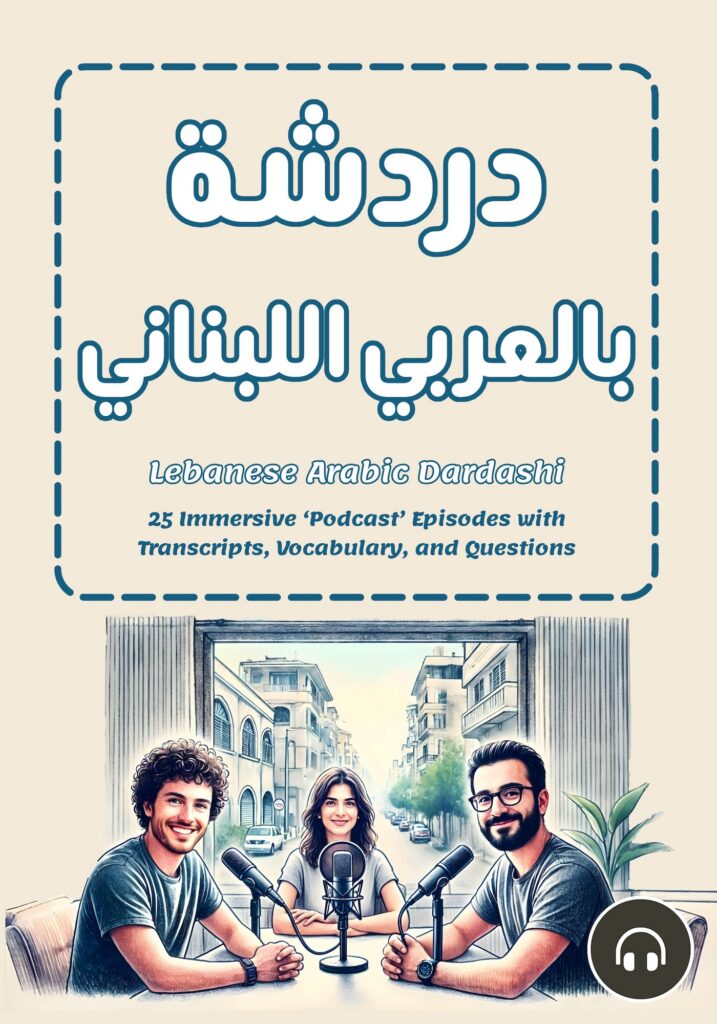
Lebanese Arabic Dardashi
This eBook is a collection of 25 podcast-style conversations in Lebanese Arabic. The audio features natural exchanges between native speakers, and the written text consists of full transcripts of those episodes. Rather than scripted textbook dialogues, the material reflects the rhythm, vocabulary, and flow of real spoken Lebanese Arabic.